A residential dumpster rental is not junk removal, the homeowner loads the container, and our team handles delivery, haul-off, and disposal. This is the difference that matters when budgeting a project in Capitol Hill…
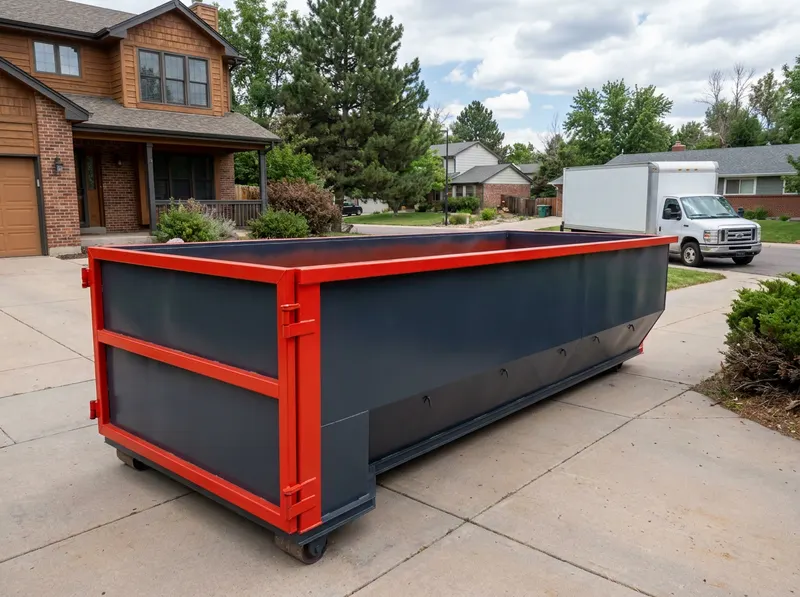
A residential dumpster rental is not junk removal, the homeowner loads the container, and our team handles delivery, haul-off, and disposal. This is the difference that matters when budgeting a project in Capitol Hill or Baker: a labor crew is not carrying debris to the truck, so the price covers the steel box and the dump run only. The container is a roll-off dumpster, delivered on a truck that tilts and rolls it onto the ground, typically onto a driveway.
Step 1 is picking a size against the job. The 10-yard dumpster ($595) holds roughly 4 pickup-truck loads and fits a single-room cleanout or a bathroom remodel in a tight Highlands (LoHi) lot. The 15-yard ($650) and 20-yard ($695) suit a kitchen gut or a garage cleanout in Park Hill, with the 20-yard holding about 8 pickup loads. The 30-yard ($795) matches a roof tear-off or a whole-house decluttering in Washington Park, and the 40-yard ($895) covers a major renovation or an estate cleanout across Stapleton (Central Park) and Berkeley. If a project is a single room, choose the 10-yard; if it is a roof tear-off, choose the 30-yard, the trade-off is driveway space against debris volume, since a 40-yard runs about 22 feet long and needs clear overhead room away from the Xcel service lines common on older Cherry Creek blocks. Step 2 is placement: a container set on a driveway avoids the public-right-of-way permit that the City and County of Denver requires for street placement under its right-of-way rules (denvergov.org). Step 3 is loading, and Step 4 is a call for pickup.
Weight is where generic rentals surprise homeowners. Flat pricing here means the quoted number is the number, no per-ton overage billed after the fact. That matters for heavy loads: concrete, brick, dirt, and roofing shingles weigh far more than household junk, and most roll-off operators meter those by the ton. A single pallet of asphalt shingles can run well over a ton, which is exactly the kind of charge that balloons a cheap-looking quote. Certain items stay out of any residential dumpster by law: paint, solvents, batteries, and electronics are classified as household hazardous waste by the EPA (epa.gov) and are routed instead through Denver's Household Hazardous Waste facility. Tires, appliances with refrigerant, and liquids are also excluded; the EPA's RAD program (epa.gov) covers proper fridge and freezer disposal, and scrap steel often qualifies for recycling under Earth911 guidance (earth911.com). Keeping the load inside the fill line also keeps it road-legal, a point tied to Colorado CDOT load-securement standards (codot.gov) and federal FMCSA cargo rules (fmcsa.dot.gov) that govern the haul.
Driveway protection is built into the drop. The roll-off wheels and the rear roller are where damage happens, and boards under the contact points spread the load so a Sloan's Lake concrete or paver driveway stays intact. Denver's expansive clay soils, noted by the Colorado Geological Survey (coloradogeologicalsurvey.org), make a flat, firm placement spot worth a minute of planning. For homeowners separating recyclables from general debris, the Colorado Department of Public Health and Environment publishes diversion guidance (cdphe.colorado.gov), and the national Solid Waste Association sets the operating standards most haulers follow (swana.org). Call (720) 606-7918 for a size recommendation before delivery.
Every job gets a firm, written price after an on-site visit.
Tell us about your residential dumpster rental job in Denver and we'll send a clear, written quote, usually the same day.
 Ridgeback Dumpster Rental