The 40-yard dumpster is the largest roll-off in the Ridgeback Dumpster Rental fleet, holding about 40 cubic yards, roughly 16 standard pickup loads or the full contents of a 2,500-plus square-foot cleanout. The 30-yard…
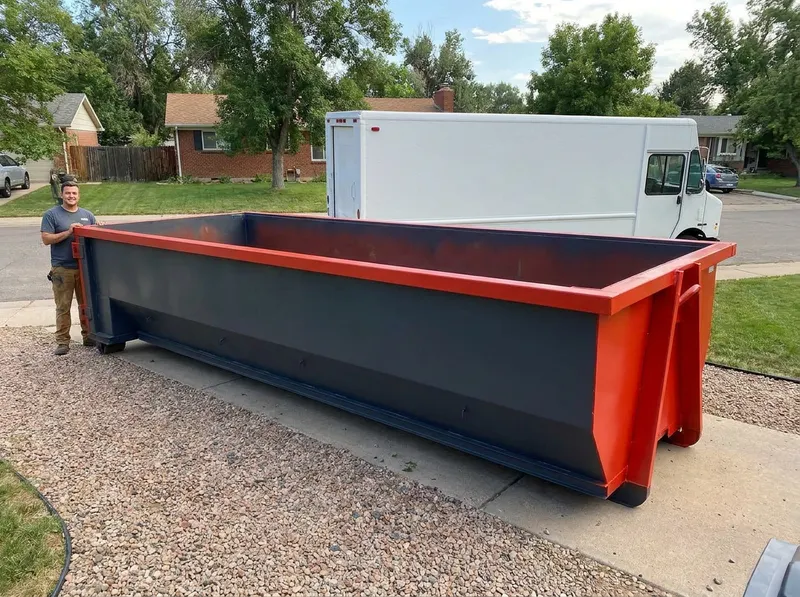
The 40-yard dumpster is the largest roll-off in the Ridgeback Dumpster Rental fleet, holding about 40 cubic yards, roughly 16 standard pickup loads or the full contents of a 2,500-plus square-foot cleanout. The 30-yard holds about 12 pickup loads at a flat $795; the 40-yard adds roughly a third more volume for $100 more. Both share the same 8-foot width and height; the 40-yard is about 22 feet long versus 20 feet, so the footprint difference matters most on tight lots.
Step 1: pick your size, for a single-room remodel in Capitol Hill a 10-yard at $595 is usually enough, but a whole-house estate cleanout in Park Hill or a commercial tenant turnover near Stapleton (Central Park) fills a 40-yard fast.
Step 2: confirm placement, a 40-yard needs about 60 feet of clear straight-line space for the delivery truck, which rules out many narrow Baker and Berkeley driveways but fits the wider lots in Montbello and alley-access properties near Sloan's Lake. Step 3: we deliver on wood planks so the driveway stays protected. Step 4: load it, the 40-yard has a swing-door rear gate for walk-in loading of bulky items.
Step 5: call for pickup and we haul it to the transfer station.
Decision guidance: if your debris is heavy and dense, concrete, dirt, roofing shingles, brick, a 40-yard is the wrong choice because dense material hits legal road-weight limits long before the box fills; a 20-yard at $695 or a 30-yard at $795 suits heavy loads. The 40-yard is built for high-volume, low-density debris: framing lumber, drywall, cabinetry, furniture, carpet, and general construction and demolition debris that the EPA tracks under C&D materials. A dumpster rental is not junk removal, you load the container yourself, which is why the flat price stays low compared with hauling crews.
Prohibited items follow Denver and Colorado disposal rules: no paint, solvents, batteries, tires, propane tanks, refrigerators with Freon, or any household hazardous waste, which the state routes through Colorado's hazardous-waste program.
Electronics are banned from Colorado landfills and should go through a recycling locator; mattresses and large appliances may carry separate handling at the Denver Solid Waste Management transfer facility. Clean concrete, asphalt, and dirt should be kept out of a mixed 40-yard and sent to dedicated fill recycling instead, per material-recovery guidance.
Placement on a public street in Denver, common on the dense blocks of Cherry Creek and Highlands (LoHi) where driveways are short, requires a right-of-way permit from the Denver Department of Transportation and Infrastructure. On your own driveway no permit is needed.
Jobsite placement for contractors should keep the container clear of foot-traffic paths under OSHA construction standards, and loaders should wear gloves and eye protection when handling demolition debris. For construction-sector sizing norms, the National Waste & Recycling Association documents roll-off container classes.
Every job gets a firm, written price after an on-site visit.
Tell us about your 40-yard dumpster job in Denver and we'll send a clear, written quote, usually the same day.
 Ridgeback Dumpster Rental